

Skip to content
GOHUNT Brand

Brand / 03

Grammar & style

Clarity and consistency above all. Great writing is natural and never draws attention to itself.
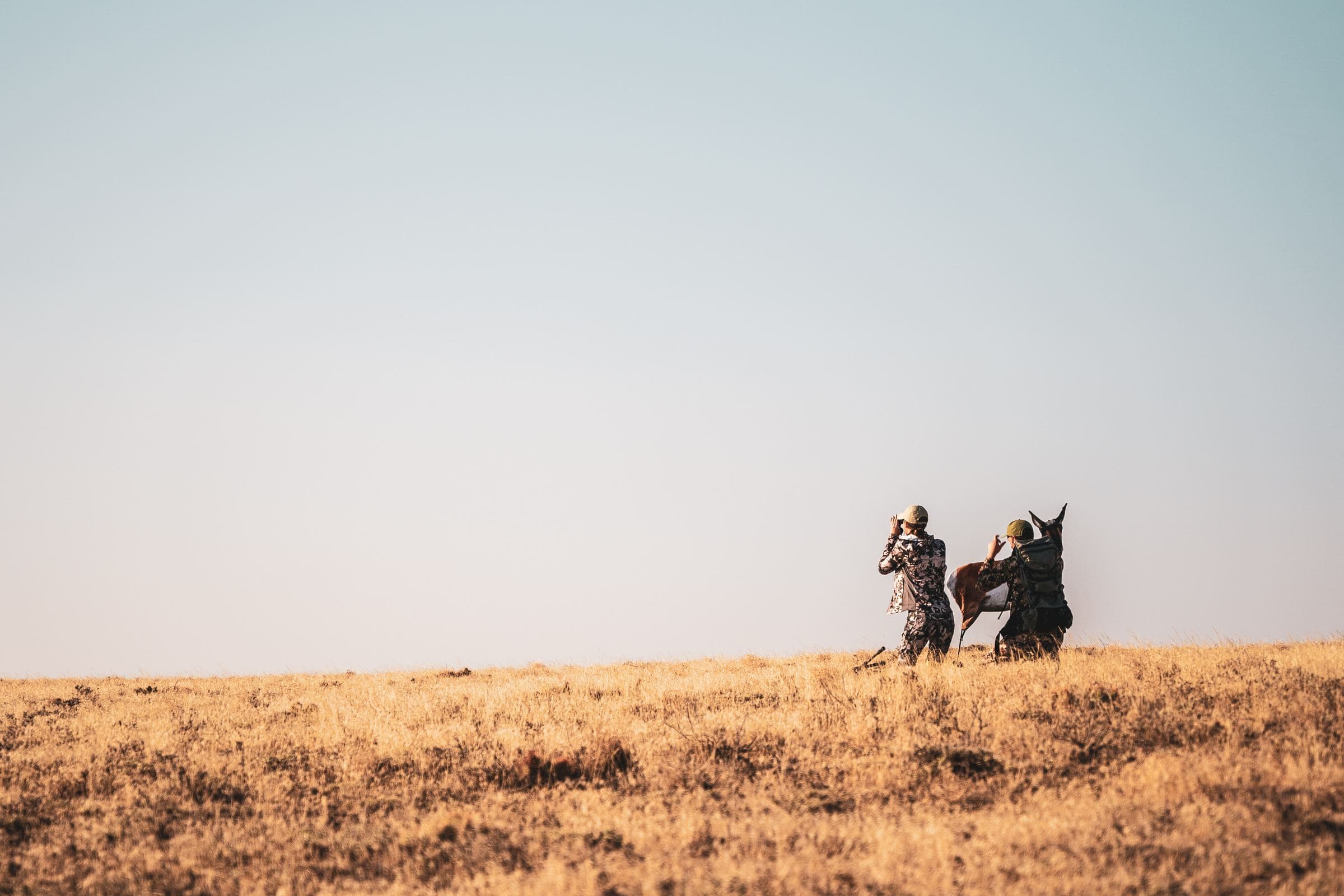
Two hunters on open golden prairie under a big sky, one glassing and one carrying a pronghorn

Keep it short, positive, and plain

  1. Use short words, short sentences, and short first paragraphs.
  2. Be positive, not negative.
  3. Use vigorous language and avoid the passive voice.
  4. Avoid technical jargon. Speak plainly.
  5. Be inclusive. Inform and educate without talking down.
  6. Eliminate superfluous words.
  7. Take care with the sequence of tenses.
  8. Do not split verbs. Do not split infinitives.

GOHUNT is always all caps

Always

GOHUNT

Title case “Gohunt” only when a platform (e.g. Facebook or Google ads) bans all-caps company names. Make every effort to use all caps first.

Never

  • GoHunt
  • Gohunt
  • GOhunt
  • goHUNT
  • GOHUNTing

GOHUNT is a proper name, not a verb. Not “Let’s GOHUNT” or “Get ready to GOHUNT”—write “Gear up and go hunt.”

Email
name@GOHUNT.com
URL
GOHUNT.com
Never “www.”
Hashtag
#GOHUNT
Possessive
GOHUNT’s
Lowercase “s”

Oxford comma

Always use it.

GOHUNT gives you the tools you need to be fast, efficient, and to have more fun while hunting.

Case

Title case for article titles and citations. Sentence case for headlines and top-line brand communication.

Lists

Capitalize the first word. No period on single sentences; full punctuation for multi-sentence items. Never mix styles in one list.

Hyphens

Never hyphenate to break lines unless the word already contains one (e.g. “bolt-action”).

Numbers

Spell out one through nine; numerals for 10 and up. Spell out ordinals (“first,” not “1st”). Decimals always use numerals (1.5).

Widows

Never leave a single word on its own line. Use line breaks—or `text-wrap: balance` / `pretty` on the web.

Is this word necessary?

Ask as you write: Would a different word be better? Does it mean what I intend? Is it redundant?

Adverbs

Overused adverbs weaken sentences. Be specific instead.

  • rather, quite, relatively, fairly
  • very, absolutely, extremely
  • mostly, predominantly, essentially
  • usually, generally, consistently

BeforeMy binoculars were heavy.

AfterMy binoculars weighed 28 ounces.

Infinitives

Keep “to” next to its verb.

BeforeWe decided to not go to the gas station.

AfterWe decided not to go to the gas station.

Its vs. it’s

It’s = it is. Its = possessive.

BeforeThe bear came out of it’s den.

AfterThe bear came out of its den.

Jargon

Avoid biologist lingo the average hunter rarely uses. “Habitat” and “buck-to-doe ratio” are fine.

  • population density
  • monoculture vegetation
  • juvenile recruitment
  • wildlife habitat complexes
  • dispersal patterns

Tense

Future tense gets wordy.

BeforeYou will see that big bucks will tend to stay in heavy cover.

AfterBig bucks tend to stay in heavy cover.

Spelled our way

Consistent spelling and capitalization for terms the hunting community uses every day.
Bivvy / bivvy sack
Not bivy, bivey, or bivvie.
Backward, forward, toward
No “s” (not “backwards”).
Canada goose
Not “canada goose” or “Canadian goose.” Don’t capitalize “goose.”
Calibers
.220 Swift, .30-06, .30-30, 12 gauge, 7mm Remington Magnum. Capitalize “magnum” only as part of an established caliber name.
Dall sheep
Not “dall sheep” or “Dall’s sheep.”
E-scout
Capitalize within a sentence. Always hyphenate.
Mossback, mossyback
Avoid—brings to mind a certain hunting outfit.
Muley, muleys
Not mulie or mulies.
Nonresident, nontypical
No hyphen.
Pinyon
Not pinion, pinon, or piñon.
Plurals
Elk (not elks), antelope, bears, sheep.
Ranges
“170 to 180-class bucks” or “bucks scoring 170-180 points”—not “170-180-point deer.”
Species
There is no “specie.” Capitalize only proper names (Dall, Coues).
Still hunting
Not still-hunting or stillhunting. Avoid—many confuse it with stand hunting.
Trophy
Avoid. “Trophy-size buck” over “trophy buck”; “bucks in the 170 to 190 range” is better still.
Whitetail deer
Not “white tail” or “white-tail.”